Assistant. Professor
Computer Science & Artifical Intelligence
Sri Satya Sai University of Technology and Medical Sciences
11
Internet of Things, Deep Learning, Artifical Intelligence
Internet of Things
Mail: r.prashanth@sru.edu.in
Ph.D in Computer Science & Engineering from Sri Satya Sai University of Technology and Medical Sciences
M.Tech in Computer Science & Engineering from Jawaharlal Nehru Technological University Hyderabad
B.Tech in Information Technology from Jawaharlal Nehru Technological University Hyderabad
Assistant. Professor at MARRI LAXMAN REDDY INSTITUTE OF TECHNOLOGY AND MANAGEMENT, from 2022-03-05 to 2025-05-04.
Assistant. Professor at ST.MARTIN’S ENGINEERING COLLEGE, from 2021-04-07 to 2022-02-21.
Assistant. Professor at SREYAS INSTITUTE OF ENGINEERING AND TECHNOLOGY, from 2019-08-31 to 2021-03-31.
Assistant. Professor at SVS GROUP OF INSITUTIONS, from 2015-04-13 to 2019-01-12.
Ph.D
PG
UG
D.Panduranga, R.Prashanth Kumar, More Swami Das, G.Narender, M. Sreelaxmi, *N.Rajeswaran, Sustainable Aquaculture Management through IoT and Deep Learning-Driven Remote Monitoring, Proceedings of the 8th International Conference on Electronics, Communication and Aerospace Technology (ICECA 2024)
Mr. Ravula Prashanth Kumar, Dr. Harsh Lohia, Dr. A. Ramaswami Reddy, A Better Software Framework for Increasing Qos in the Internet of Things TELEMATIQUE Volume 22 Issue 1, 2023, ISSN: 1856-4194 230 – 241
Mr. Ravula Prashanth Kumar, Dr. Harsh Lohia, Dr. A. Ramaswami Reddy, A Survey On Iot Environment Qos Architecture And Implementations (Mukt Shabd Journal ISSN NO: 2347-3150)
Dr. Harsh Lohia, Dr. A. Ramaswami Reddy, Mr. Ravula Prashanth Kumar, A CROSS-LAYER PARADIGM WITH QOS AWARENESS FOR IOT APPLICATIONS IN URBAN DEVELOPMENT, Industrial Engineering Journal ISSN: 0970-2555, Volume : 52, Issue 7, July : 2023
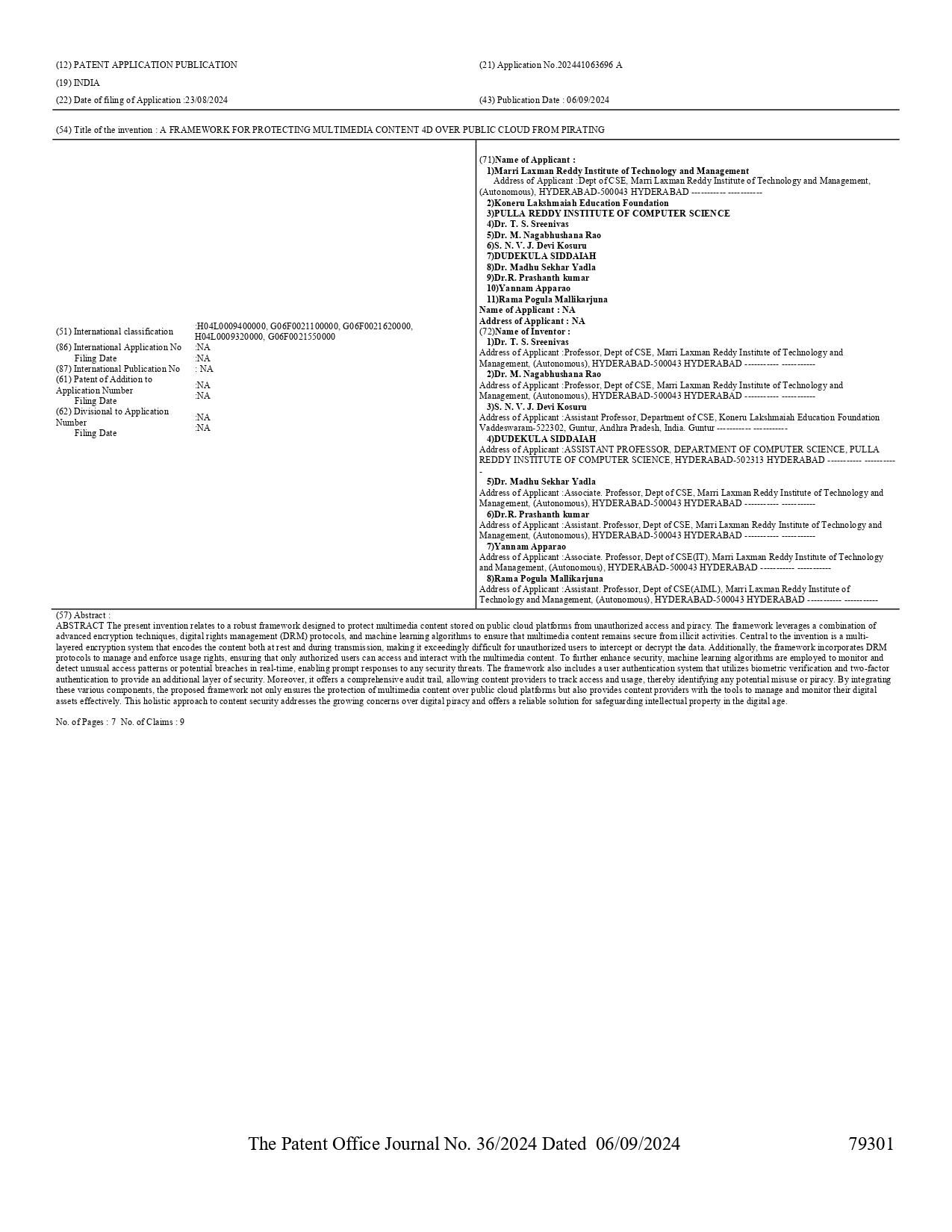
The present invention relates to a robust framework designed to protect multimedia content stored on public cloud platforms from unauthorized access and piracy. The framework leverages a combination of advanced encryption techniques, digital rights management (DRM) protocols, and machine learning algorithms to ensure that multimedia content remains secure from illicit activities. Central to the invention is a multilayered encryption system that encodes the content both at rest and during transmission, making it exceedingly
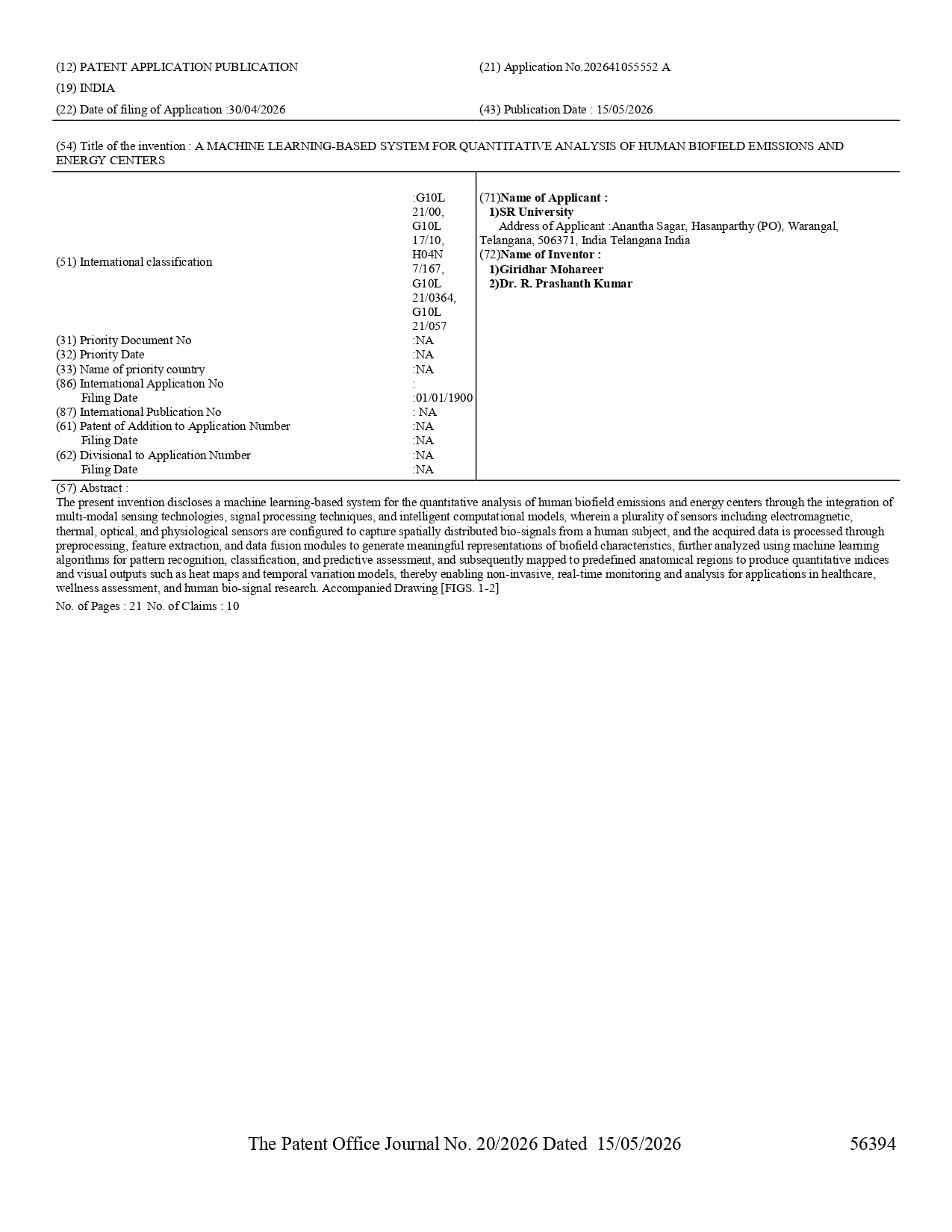
The present invention discloses a machine learning-based system for the quantitative analysis of human biofield emissions and energy centers through the integration of multi-modal sensing technologies, signal processing techniques, and intelligent computational models, wherein a plurality of sensors including electromagnetic, thermal, optical, and physiological sensors are configured to capture spatially distributed bio-signals from a human subject, and the acquired data is processed through preprocessing, feature extract

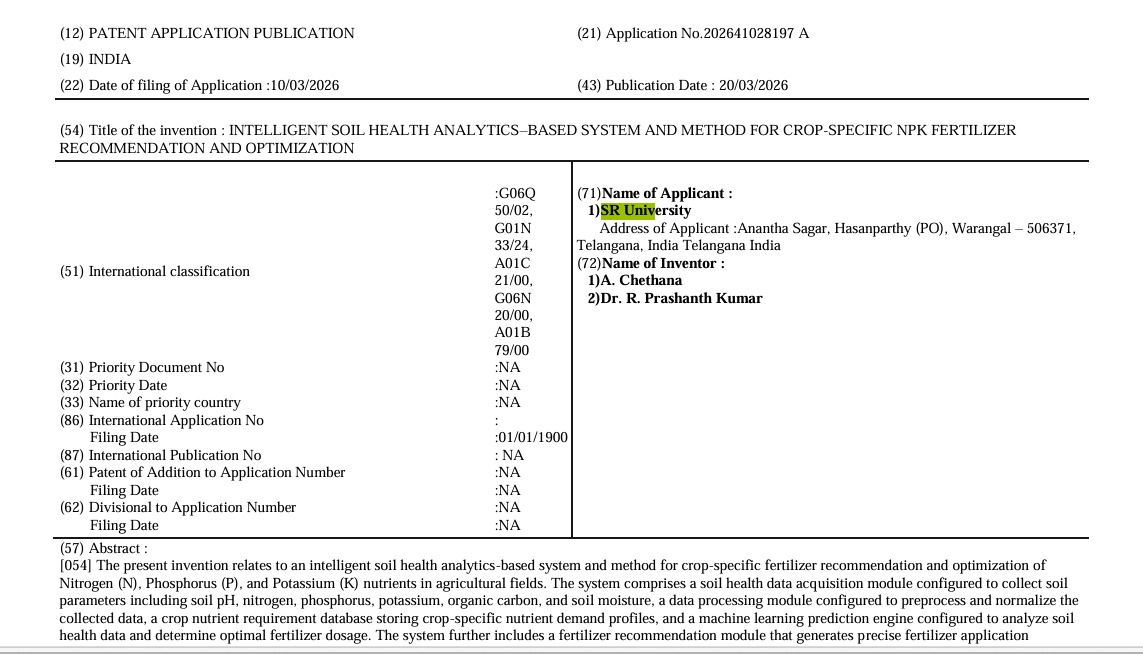
The present invention provides an intelligent soil health analytics-based system and method for crop-specific fertilizer recommendation and optimization of Nitrogen (N), Phosphorus (P), and Potassium (K) nutrients. The invention is 5 designed to analyze soil nutrient conditions and generate precise fertilizer recommendations tailored to specific crops and field conditions, thereby improving agricultural productivity and promoting sustainable nutrient management practices.
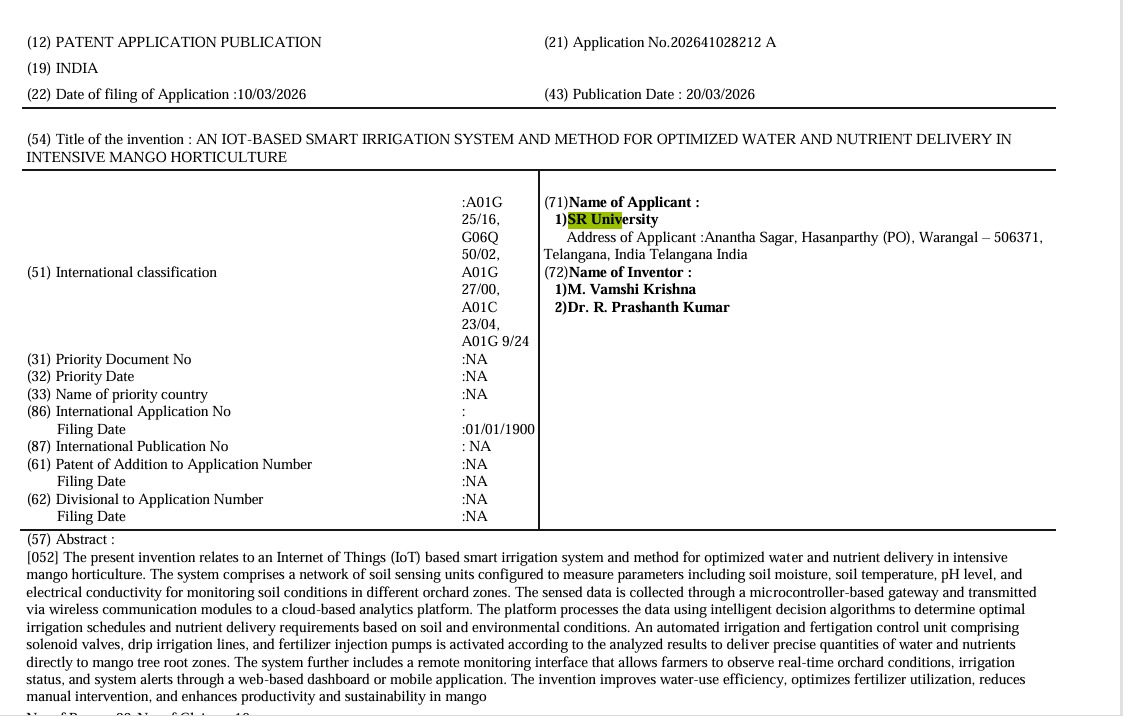
The present invention discloses an Internet of Things (IoT) based smart irrigation system and method for optimized water and nutrient delivery in intensive mango horticulture. The invention integrates soil sensing devices, environmental monitoring units, wireless communication modules, and an automated irrigation control mechanism to ensure efficient water utilization and balanced nutrient supply for mango orchards.
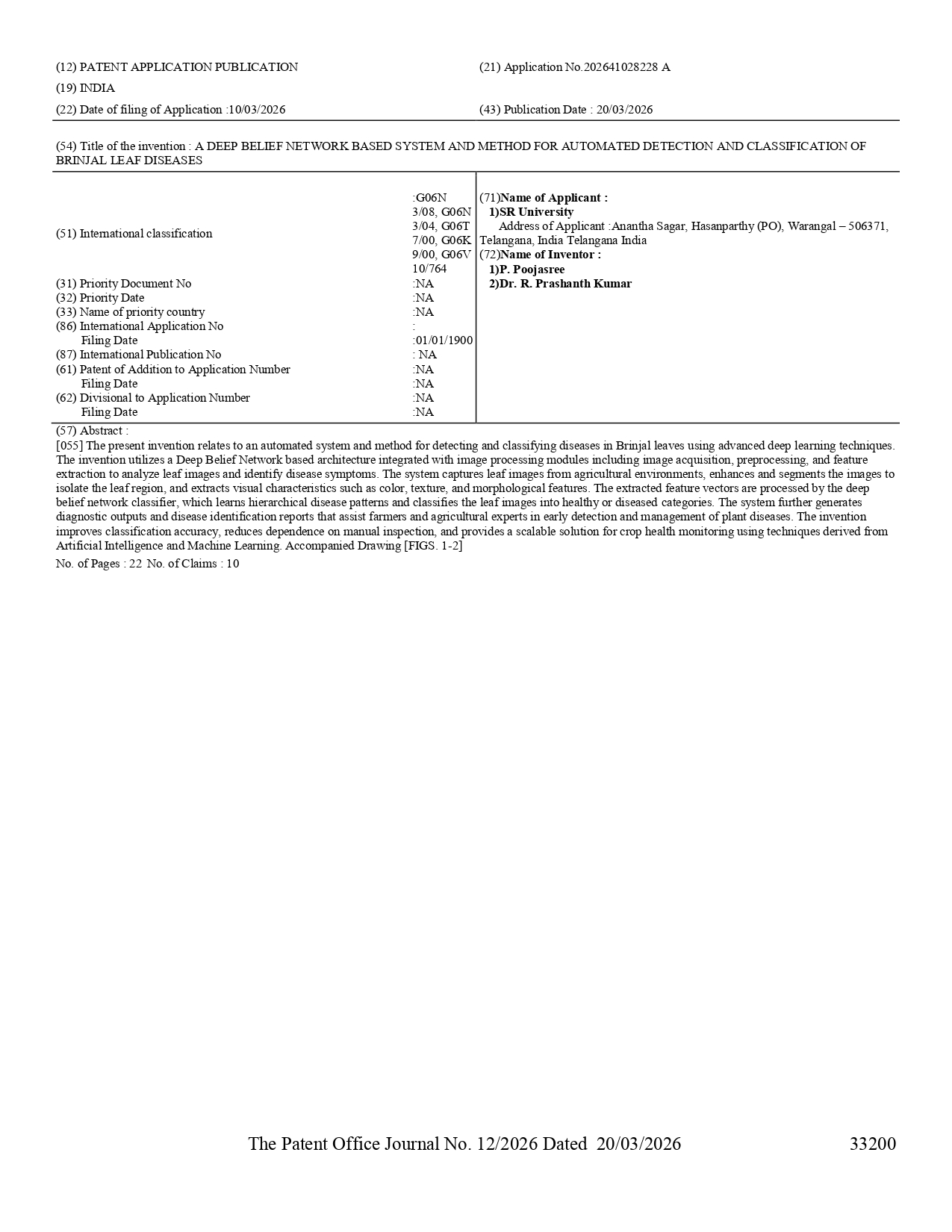
The present invention provides an intelligent system and method for automated detection and classification of diseases affecting Brinjal leaves using advanced deep learning techniques. The invention utilizes a Deep Belief Network based architecture to analyze leaf images, identify disease patterns, and classify the detected diseases with improved accuracy and reliability.
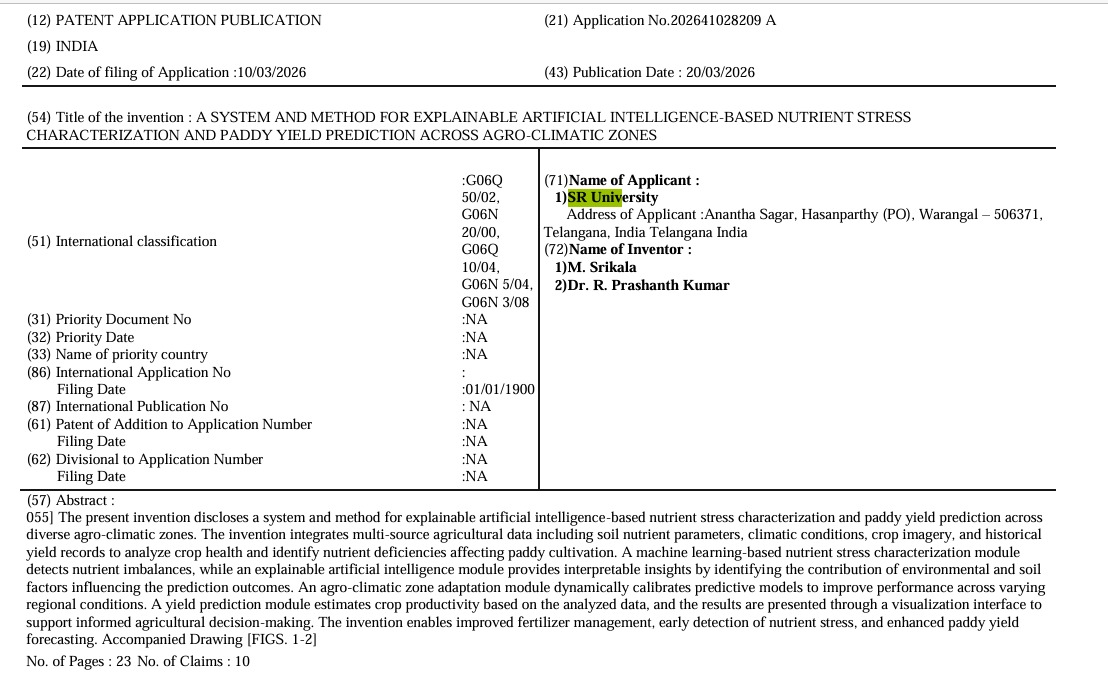
The present invention discloses a system and method for explainable artificial intelligence-based nutrient stress characterization and paddy yield prediction across diverse agro-climatic zones. The invention integrates multi-source agricultural data including soil nutrient measurements, climatic 5 parameters, crop imagery, and historical yield records to identify nutrient stress conditions and forecast crop productivity with improved accuracy and transparency.
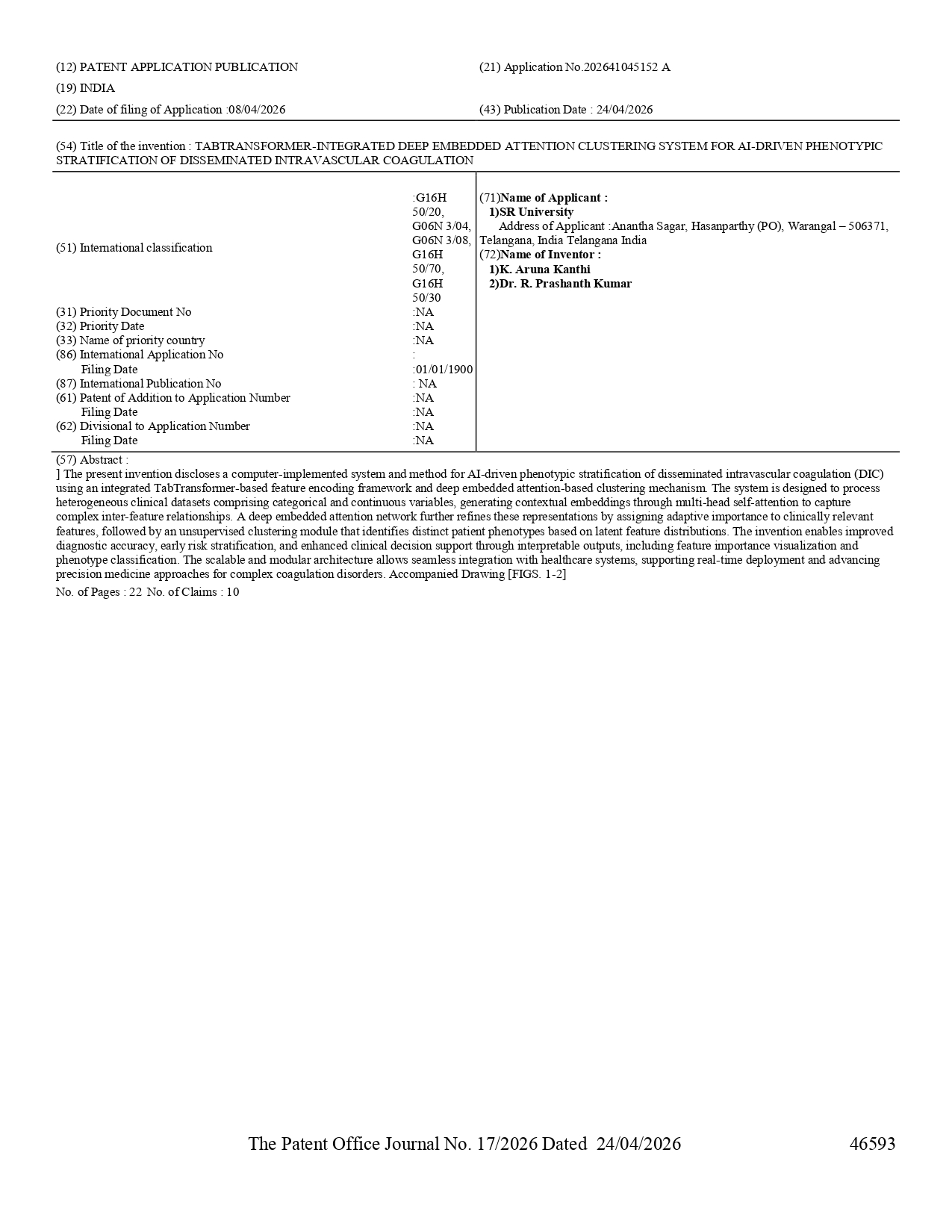
The present invention discloses a computer-implemented system and method for AI-driven phenotypic stratification of disseminated intravascular coagulation (DIC) using an integrated TabTransformer-based feature encoding framework and deep embedded attention-based clustering mechanism. The system is designed to process heterogeneous clinical datasets comprising categorical and continuous variables, generating contextual embeddings through multi-head self-attention to capture complex inter-feature relationships. A deep embed
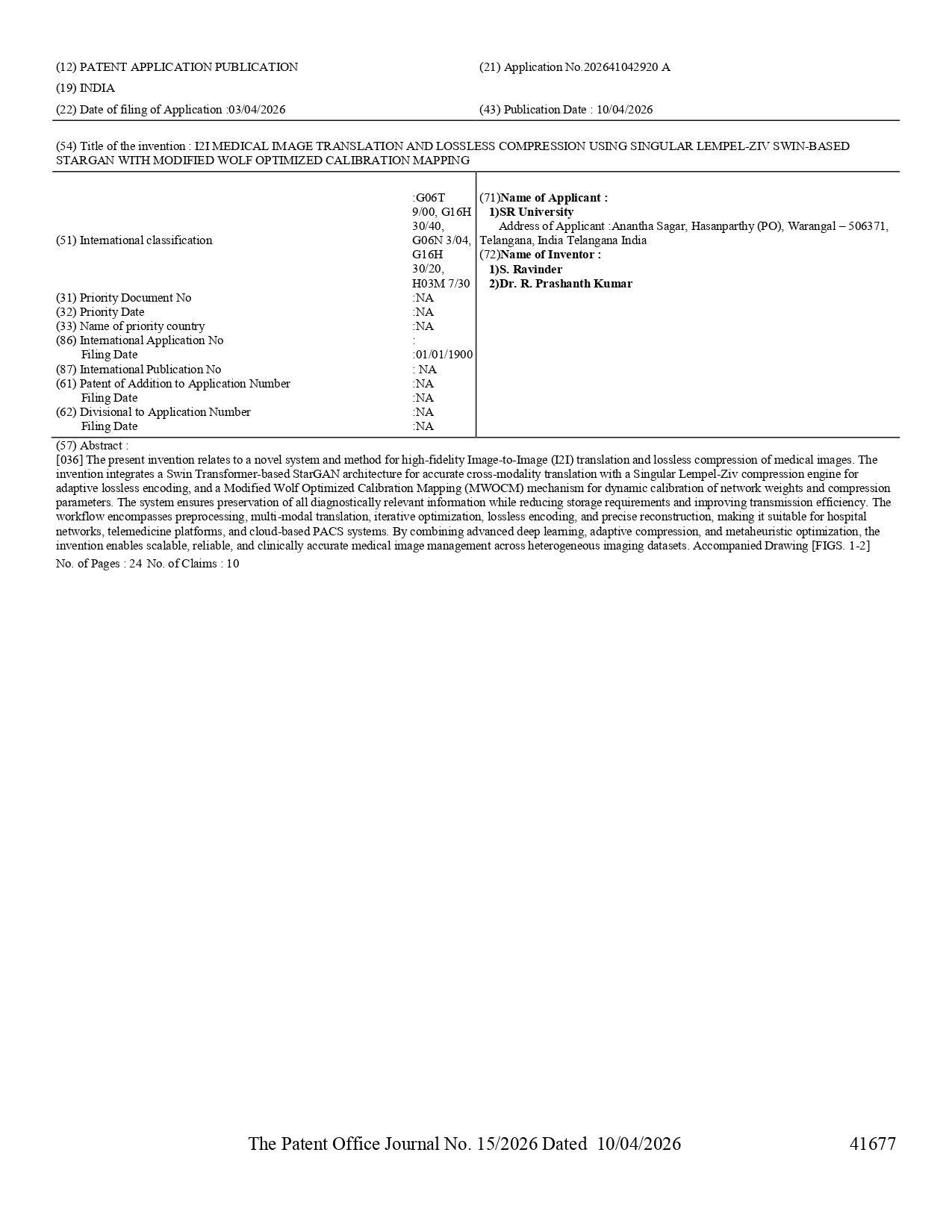
The present invention relates to a novel system and method for high-fidelity Image-to-Image (I2I) translation and lossless compression of medical images. The invention integrates a Swin Transformer-based StarGAN architecture for accurate cross-modality translation with a Singular Lempel-Ziv compression engine for adaptive lossless encoding, and a Modified Wolf Optimized Calibration Mapping (MWOCM) mechanism for dynamic calibration of network weights and compression parameters.
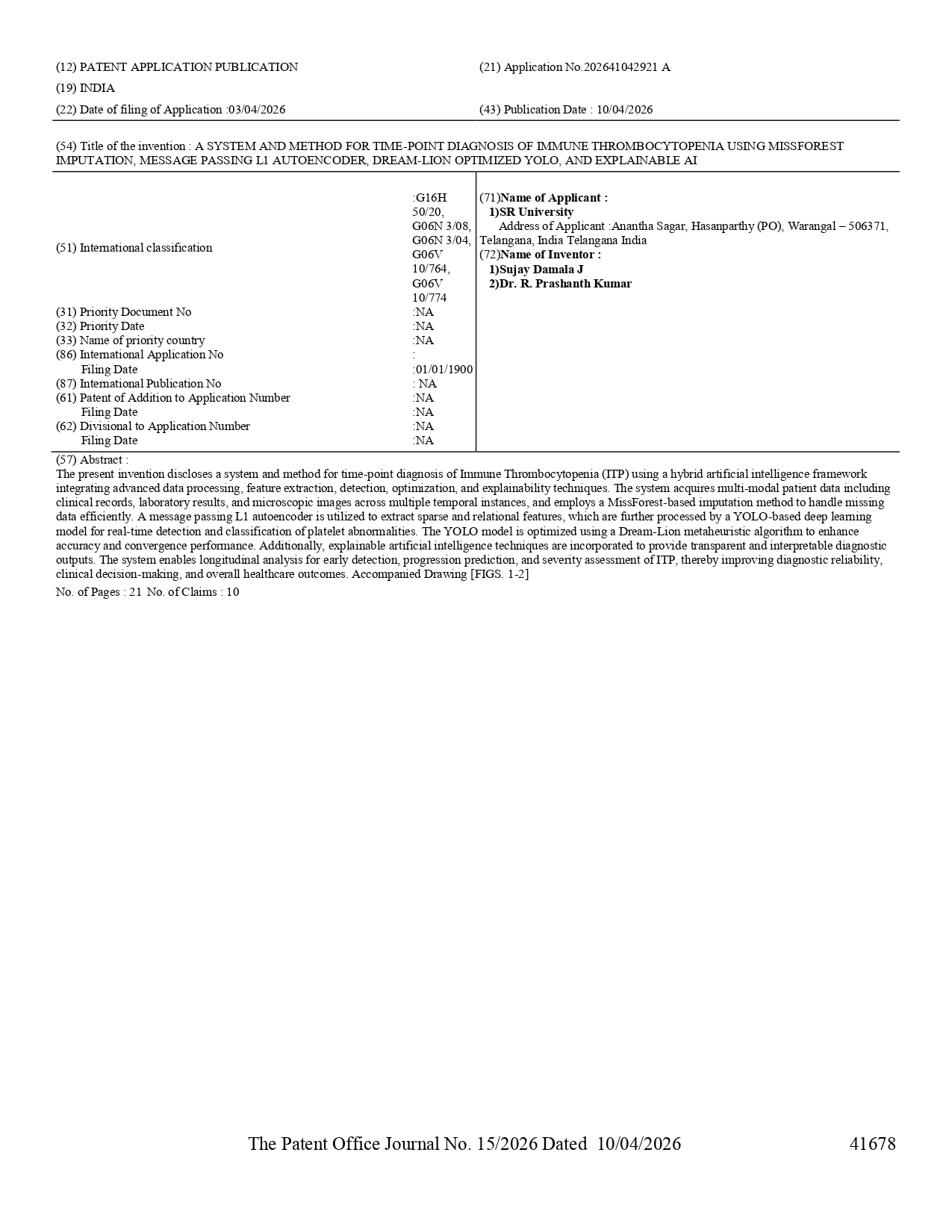
The present invention discloses a system and method for time-point diagnosis of Immune Thrombocytopenia (ITP) using a hybrid artificial intelligence framework integrating advanced data processing, feature extraction, detection, optimization, and explainability techniques. The system acquires multi-modal patient data including clinical records, laboratory results, and microscopic images across multiple temporal instances, and employs a MissForest-based imputation method to handle missing data efficiently. A message passing
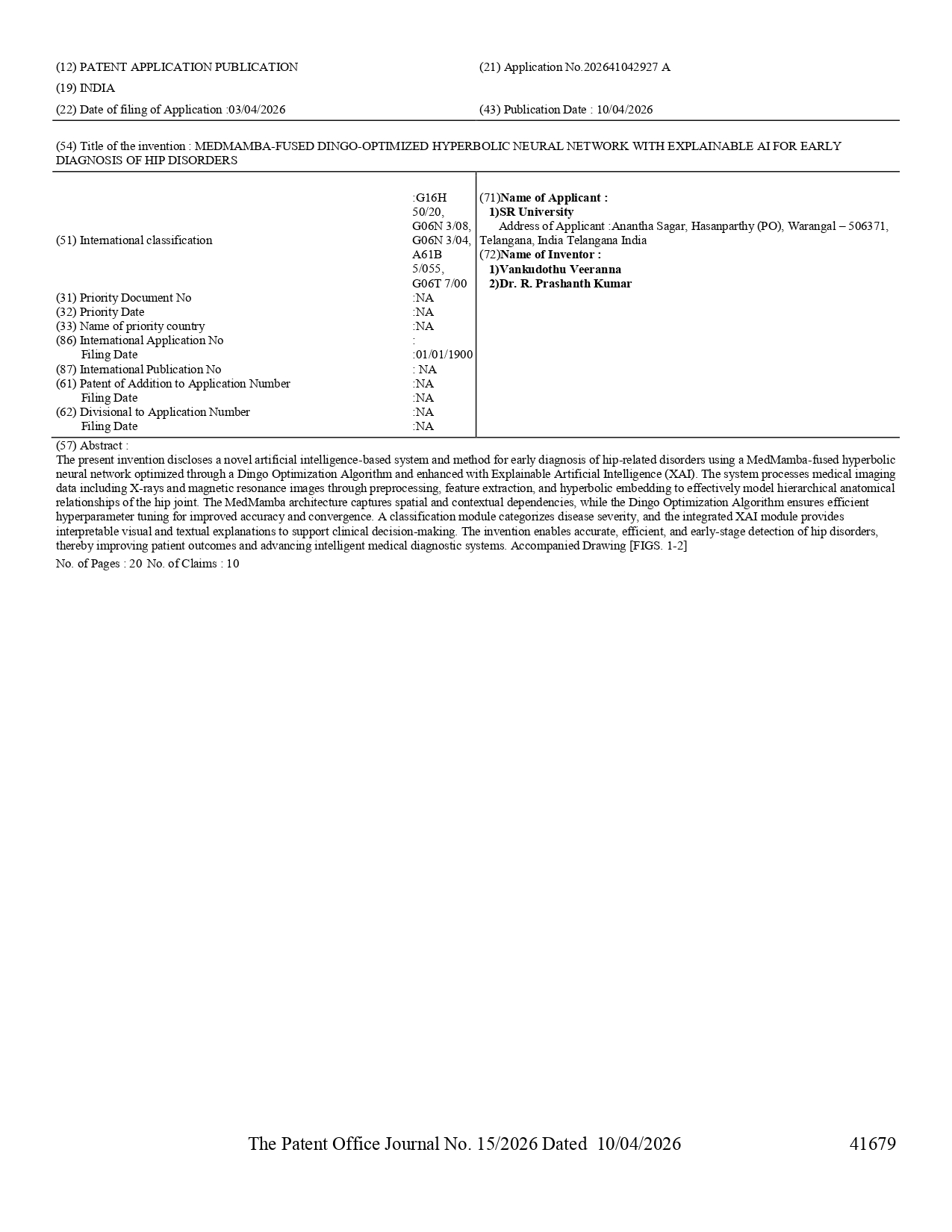
The present invention discloses a novel artificial intelligence-based system and method for early diagnosis of hip-related disorders using a MedMamba-fused hyperbolic neural network optimized through a Dingo Optimization Algorithm and enhanced with Explainable Artificial Intelligence (XAI). The system processes medical imaging data including X-rays and magnetic resonance images through preprocessing, feature extraction, and hyperbolic embedding to effectively model hierarchical anatomical relationships of the hip joint.