SCHOOL OF AGRICULTURE

Overview

Mechanical Engineering (ME) is a versatile and foundational discipline essential for various industries, focusing on the design, analysis, manufacturing, and maintenance of mechanical systems. This field is at the forefront of integrating cutting-edge technologies such as smart manufacturing, Industry 4.0, robotics, renewable energy systems, and advancements in automobile engineering including electric vehicles (EVs). Smart manufacturing and Industry 4.0 leverage IoT, AI, and machine learning to create efficient, flexible, and responsive production processes. Robotics and renewable energy systems contribute to automation, sustainability, and efficiency in diverse applications.

Pursuing a B. Tech in Mechanical Engineering at SRU means immersing yourself in a dynamic environment that nurtures innovation and entrepreneurship. SRU's curriculum blends core mechanical engineering principles with advanced technologies, providing hands- on experience through labs, internships, and collaborative projects. The university supports students in transforming their ideas into products and start-ups, fostering a culture of creativity and enterprise. Students can also opt the minors in Entrepreneurship, Industry 4.0 etc., to enhance their employability opportunities. The extensive list of minors is given here..  

The students of the program will have an opportunity to work as iScholars in  Center for Materials & Manufacturing (CMM)  which helps to gain hands-on experience on creative projects and make them industry-ready. A student can also explore other  interdisciplinary research centers @SRU

50 +

Patents

200 +

Publications

50 +

Research Projects

50 +

Books & Articals

Project-based curriculum which caters to industry needs. Students can participate in Hackathons, competitions & Maker-spaces to hone their practical skills. Workshops on industry relevant topics happen all the time

Flexibility to set your own schedule or the sequence of courses to tailor to your interests. You can also pursue minors in other departments

Cutting-edge industry relevant courses:

3D Printing Technology

Nanomaterials

Robotics & Automation

Mechatronics

Excellent award winning and caring faculty are available to you to help you learn new technologies and guide you in your career

iScholars program is available to help you become the next generation leaders. In the program, students learn by leading and promoting the student enrichment across campus.

Internship opportunities at SRIX as well as at partner industries and research labs

Courses designed to well acquaint students with latest manufacturing technologies

Additive Manufacturing and Drone Technology trainings are emphasized to keep the students updated to meet the industry requirements

Academic Collaborations (MoUs)

CAREER OPPORTUNITIES

Industry Areas

Smart Manufacturing and Industry 4.0

Robotics

Renewable Energy Systems

Railways and highway

Automobile Engineering and Electric Vehicles

Core Mechanical Engineering Roles

Innovation and Entrepreneurship

Construction Chemicals

Job Titles

Manufacturing Engineer

Industrial Engineer

Process Engineer

Automation Engineer

IoT Solutions Architect

Data Analyst for Manufacturing

Robotics Engineer

Automation Engineer

Control Systems Engineer

Mechatronics Engineer

Robotics Programmer

Research Scientist in Robotics

Renewable Energy Engineer

Solar Energy Systems Engineer

Wind Energy Engineer

Energy Systems Analyst

Sustainability Engineer

Energy Project Manager

Automotive Engineer

Electric Vehicle Engineer

Battery Systems Engineer

Vehicle Dynamics Engineer

Powertrain Engineer

Emissions Engineer

Mechanical Design Engineer

Product Development Engineer

HVAC Engineer

Maintenance Engineer

Quality Control Engineer

R&D Engineer

Startup Founder

Product Manager

Business Development Manager

Innovation Consultant

Technical Project Manager

Entrepreneur in Residence

Program & its Features

Programmes Offered

Graduate

Programs

B.Sc. (Hons) Agriculture

Post Graduate

Programs

M.Sc. (Agriculture) - Genetics and Plant Breeding

M.Sc. (Agriculture) - Soil Science and Agricultural Chemistry

M.Sc. (Agriculture) - Plant Pathology

M.Sc. (Agriculture) - Agronomy

M.Sc. (Agriculture) - Entomology

M.Sc. (Agriculture) - Horticulture

M.Sc. (Agriculture) - Agricultural Economics

M.Sc. (Agriculture) - Agricultural Extension

Doctoral

Programs

Ph.D.Agriculture | Agronomy | Horticulture | Genetics & Plant Breeding | Entomology | Plant Pathology | Soil Science | Agricultural Economics | Agricultural Extension

Vision

To lead in advancing sustainable smart agriculture through cutting-edge research, education, and community collaboration to address the challenges of future farming.

Mission

To deliver top-notch education in agriculture, helping students grow as leaders and succeed in their careers.s

To deliver top-notch education in agriculture, helping students grow as leaders and succeed in their careers.

To deliver top-notch education in agriculture, helping students grow as leaders and succeed in their careers.

PEOs, POs, PSOs

PEO 1: Graduates will excel as leaders and innovators in agriculture and related industries, using their technical expertise to solve complex problems and make farming more profitable.

PEO 2: Graduates will create sustainable solutions that address global challenges, demonstrating professionalism, technical competency, ethical responsibility, and commitment to solving societal tasks

PEO 3: Graduates will continuously develop problem-solving abilities, teamwork, and adaptability through hands-on experiential learning, research, and a commitment to lifelong learning in multidisciplinary fields.

Students graduating with B.Sc (Hons.) Agriculture degree should be able to:


PO 1: Agricultural Knowledge: Apply the knowledge of basic science, and core agricultural sciences to the solution of complex agriculture problems.

PO 2: Problem analysis: Identify, analyze, and develop evidence-based solutions to complex agricultural problems to reach substantiated conclusions using scientific methods, critical thinking and technology.

PO 3: Design/Development of solution: Design and develop innovative, sustainable solutions for agricultural challenges viz., resource management, crop management and agri-product management, and design processes to ensure the food and nutritional security.

PO 4: Investigate complex problems: Use inter-disciplinary and research-based knowledge, practical skills and research methods including design of experiments, analysis and interpretation of data, and synthesis of the information to provide valid conclusions for agriculture-based problems

PO 5: Modern tool usage: Apply appropriate techniques, resources, and modern agriculture and IT tools including prediction and modelling to complex agriculture problems to enhance productivity, efficiency, and sustainability in farming practices with an understanding of the limitations.

PO 6: Environment and sustainability: Understand the impact of professional agriculture practices in societal and environmental contexts, and demonstrate the knowledge of, and need for agricultural sustainability.

PO 7: Ethics: Apply ethical principles and commit to professional ethics, responsibilities and norms of the agriculture practices, and fulfil the legal obligations under the international agreements for safe global trade in agricultural commodities

PO 8: Leadership: Function effectively as a member or leader in multidisciplinary settings and develop a strong linkage in the agri-industrial or agri-entrepreneurial setup

PO 9: Communication:
Communicate effectively on complex agriculture activities with the agriculture community and with farming society at large for effective dissemination knowledge and technology

PO 10: Project management and finance: Demonstrate knowledge and understanding of the agriculture and management principles and apply these to one’s own work, as a member or leader in a team, to manage projects and in multidisciplinary environments.

PO 11: Entrepreneurial skill: Exhibit effective entrepreneurial skills in the field of agriculture to analyse the market potential and grab the opportunity.

PO 12: Lifelong learning: Recognize the need for, and have the preparation and ability to engage in independent and lifelong learning in the broadest context of technological change in field of agriculture

AGRONOMY:


PSO1: Sustainable Crop Productivity and Resource Efficiency: Develop and implement innovative agronomic practices that enhance crop yields, improve nutritional quality, and maximize resource use efficiency. This includes advancing soil health, nutrient management, and water conservation strategies, while promoting climate-resilient and sustainable farming systems through precision agriculture and digital technologies.
PSO2: Agronomic Research, Capacity Building, and Technology Transfer: Foster cutting-edge research to address agricultural challenges such as food security, climate change, and resource depletion. Strengthen capacity-building programs and collaboration with industry and global institutions to ensure the effective transfer of agronomic innovations and empower farmers with sustainable, profitable practices.

GENETICS AND PLANT BREEDING:


PSO1: Graduates will understand genetic variation and inheritance patterns, apply breeding techniques to develop improved crop varieties, and implement effective seed production and quality control methods. Additionally, they will be skilled in protecting and managing intellectual property related to plant innovations, ensuring compliance with IPR regulations. This comprehensive knowledge will enable them to contribute effectively to agricultural research, development, and commercialization, fostering advancements in crop improvement and sustainable agricultural practices.
PSO2: Graduates will exhibit proficiency in both modern and traditional breeding methods for enhancing Kharif and Rabi crops, focusing on yield improvement, disease resistance, and abiotic stress tolerance. They will gain a thorough understanding of the physiological and genetic mechanisms affecting crop growth, development, and adaptation. Equipped to tackle challenges in genetic improvement, graduates will address issues such as pest and disease resistance, climate adaptability, and quality traits, optimizing breeding strategies to meet agricultural needs.

ENTOMOLOGY:


PSO1: Graduates will acquire a thorough understanding of insect morphology and ecology, enabling them to proficiently identify both insect pests and beneficial species. They will gain insights into the life cycles and ecological roles of these insects, equipping them with the skills to apply integrated pest management (IPM) strategies effectively. This knowledge will allow them to manage insect-related issues in agriculture with a focus on minimizing crop losses and reducing reliance on chemical pesticides.
PSO2: Aspirants will develop a broad and in-depth comprehension of various aspects of entomology, including insect morphology, ecology, crop pests, apiculture, nematology, sericulture, biological control, toxicology, and economic entomology. They will be prepared to engage in interdisciplinary research and utilize advanced technologies to enhance agricultural productivity, improve farmer incomes, promote human health, and mitigate environmental pollution. Their expertise will address future challenges in crop production and storage, fostering sustainable agricultural practices.

SOIL SCIENCE:


PSO1: Provide in depth knowledge about physical, chemical, and biological properties of soils, as well as the processes that govern soil formation, classification, and fertility, principles and practices of sustainable soil management, use of Geographic Information Systems (GIS) and remote sensing technologies for soil mapping, land use planning, and environmental monitoring, role of essential nutrients in crop production, with an emphasis on soil testing, fertilizer use, and nutrient cycling.
PSO2: Develop the ability to identify and manage problem soils and irrigation water, applying reclamation techniques, and assessing water quality. Gain expertise in sustainable resource management, environmental policy, and disaster risk reduction. Understand plant biochemical processes, metabolic pathways, and utilize advanced biochemical techniques in research.

PLANT PATHOLOGY:


PSO1: Identification and Diagnosis: Graduates will develop the skills to identify and diagnose plant diseases accurately through visual symptoms, microscopic examination and laboratory techniques such as culturing and molecular diagnostics.
PSO2: Disease Management Strategies: Graduates will be equipped with knowledge and skills to develop, recommend, and implement effective plant disease management strategies, including integrated pest management (IPM), biological control, chemical control and cultural practices.

AGRICULTURAL MICROBIOLOGY:


PSO1: To understand the history and contribution of scientists in the field of microbiology, basics of microbes and its mechanism to the environment and importance of microbes as insecticides, biofertilizers in agriculture.
PSO2: To understand the biodegradation, bioremediation, production of useful products and maintenance of soil health by biogeochemical cycling and to make nutrients available to plants.

HORTICULTURE AND FOOD SCIENCE:


PSO1: Graduates will possess a comprehensive understanding of the diverse aspects of horticulture and food science, including plant selection, growth, production, and the scientific principles behind food composition and nutrients. They will apply this knowledge to optimize crop production, food processing, and preservation, ensuring sustainability and food safety. With skills to analyze complex agricultural problems, they will innovate to meet the challenges of future agriculture, promoting organic and sustainable practices and communicating effectively with both specialists and non-specialists.
PSO2: Graduates will leverage horticultural and food science principles to solve practical problems related to plant management, nutrition, and health. They will assess and analyze nutritional needs, manage the economic significance of plants in food systems, and apply advanced technologies to enhance both agricultural production and food quality. Equipped with business acumen and ethical decision-making skills, they will drive innovation in food science, focusing on emerging trends such as genetically modified foods, nutraceuticals, functional foods, and sustainable solutions to global challenges like malnutrition.

AGRICULTURAL EXTENSION:


PSO1: Through this students will able gain knowledge on sociological and psychological aspects of rural areas and people and also get acquainted with some important features of rural society . As well as to improve the knowledge level of the students on concepts, Principles of Extension Education, various extension teaching methods and information sources. and acquaint the students with Agricultural, Innovation Decision Process and capacity building of various stake holders
PSO2: Through this student will able to improve the knowledge level of the students on various communication skills & personality development. As well as they will become acquaint with the concepts of journalism and how to write the agricultural news for print and electronic media for effective transfer of technology and students can also impart knowledge on entrepreneurship and its importance in socio economic development of the nation.

AGRICULTURAL ECONOMICS:


PSO1: Developing individuals with a deep insight in Economical aspect of Agriculture. To give in-depth knowledge to the students about economic theory regarding utilization and allocation of resources including labour, natural resources and capital and to upgrade students understanding about the function of agricultural markets for goods and services and income generation, its distribution and investment.
PSO2: Making students capable of finding loopholes in economic system of agriculture and suggesting suitable solutions. Developing skilled individuals capable of generating employment opportunities and to impart in-depth knowledge into special fields of choice like agricultural economics, basic econometrics, growth and development, agricultural marketing, production economics, environmental economics, agricultural financial institutions and markets.

AGRICULTURAL ENGINEERING:


PSO1: Develop technical skills in Irrigation Pumps, Soil and Water Conservation. Students gain knowledge on protected cultivation techniques and post harvest technologies.
PSO2: Students will learn farm mechanization and various farm power sources that available on farm. Learn about technical details on various renewable energy technologies that can be utilized on on-farm and off-farm.

VETERINARY SCIENCE:


PSO1: Husbandry Practices: Students will acquire practical skills in animal husbandry, including housing, handling, and welfare practices for various livestock species.
PSO2: Breeding and Genetics: Students will understand principles of animal breeding and genetics to improve livestock productivity and health through selective breeding programs.

CROP PHYSIOLOGY AND BIOCHEMSITRY:


PSO1: The Plant Physiology, Biochemistry, and Biotechnology program equips students with knowledge of plant metabolism, growth regulation, molecular biology, and biochemical processes. Emphasizing experimental skills and data analysis, graduates apply their expertise in enhancing crop productivity, sustainability, and stress tolerance, preparing them for careers in agriculture and biotechnology research.
PSO2: Students gain knowledge on plant growth metabolism, water and nutrient transport, stress responses and hormonal physiology. Emphasizing plant biochemistry and molecular intricacies students gain a deep understanding of biomolecules and metabolic pathways under growth as well as stress scenarios. Graduates apply this expertise in research, agriculture, medicine, and environmental sectors, focusing on bioproduct innovation, sustainable practices, and improving health and crop productivity.

vc
Semisars

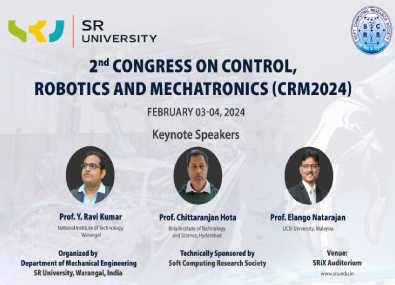
2nd CONGRESS ON CONTROL, ROBOTICS AND MECHATRONICS (CRM2024)

vc

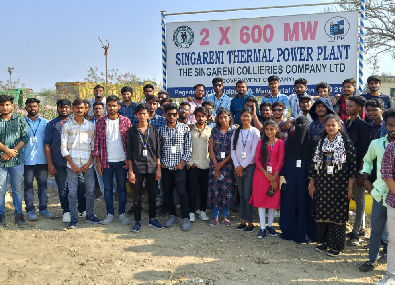
Industrial Visit to STPP, Manchiryala

vc

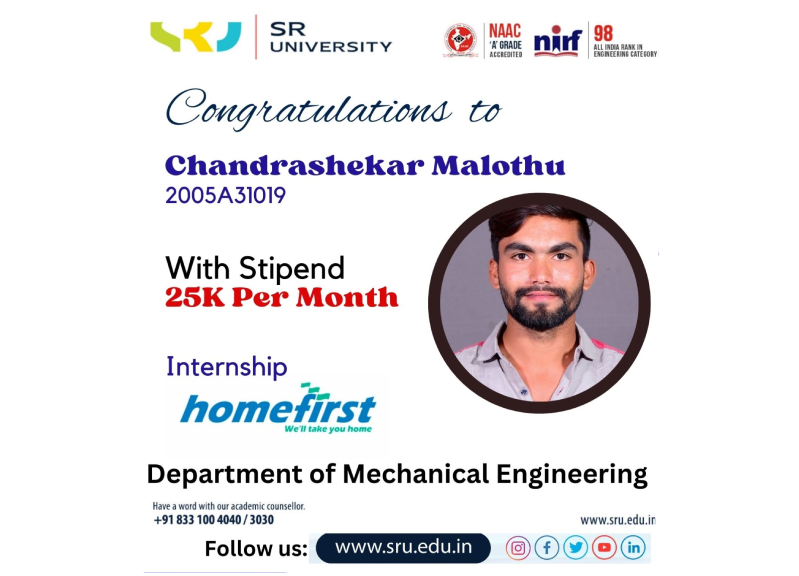
Congratulations to Chandrashekar Malothu Placed @ homefirst 25k per/mounth [Internship]

vc

YTRA The Revolutionary Project Expо 2024

vc

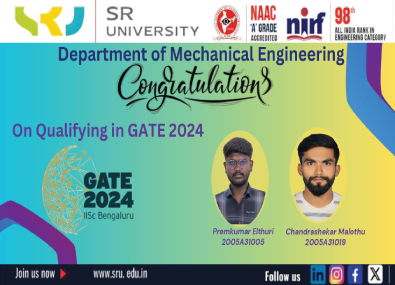
On Qualifying in GATE 2024

Placements

Highlights

50+

placed students

4.7LPA

Average Package

75+

Total Internships

Placements

Placement 1

Giruka

Prudvi

Placed @

wsp

Package With

6.5LPA

Placement 2

Uday

Kiran

Placed @

accenture

Package With

6.5LPA

Placement 2

Mamidi

Sai Kiran

Placed @

Technock

Package With

5.5LPA

Gangadi

Chakridhar

Placed @

Package With

4LPA

Thopucharla

sahith

Placed @

Package With

4LPA

Bandi

Ganesh

Placed @

Package With

4LPA

Martha

Akshitha

Placed @

accenture

Package With

4.5LPA

Nukala

Vidhya Sri

Placed @

accenture

Package With

4.5LPA

Saicharan

Akuthota

Placed @

Package With

4LPA

Narmeta

Sri Teja

Placed @

Package With

4.6LPA

Internships

Chandra

shekar

Placed @

Package With

3LPA

Nukala

Vidhya Sri

Placed @

accenture

Package With

1.9LPA

Placements

Our Esteemed Recruiters

SR University
SR University
SR University
SR University
SR University
SR University
SR University
SR University
SR University
SR University

TESTIMONIALS

In conversation with the SRU

community

Students

Partners

Faculty

I am proud to be an alumnus of SR University, which played a crucial role in my academic and professional development. The university's excellent infrastructure, dedicated faculty, and industry-relevant curriculum provided a solid foundation for my growth. Beyond academics, the vibrant campus life and extracurricular opportunities fostered my personal development. The hands-on learning experiences and support from professors equipped me with the skills and confidence to excel in my career. SR University truly prepares students to become leaders and innovators in their fields.

Shaik Umar Farooq

M.Tech 2nd Year

SR University has provided me with a well-rounded education, equipping me with the knowledge, skills, and experiences needed to succeed in my future career. I am grateful for the lifelong connections I have made here and the incredible journey of growth and discovery that SR University has facilitated.

Saikiran Mamidi

B.Tech Student

My time at SR University has been incredibly fulfilling. The education I am receiving is preparing me for a successful career, and the experiences I've had here are shaping me into a well-rounded individual. I am proud to be a part of this vibrant community and look forward to the rest of my journey at SR University.

Mateti Shiva

B.Tech Student

As a current student at SR University, I can confidently say that my academic journey here has been immensely rewarding. The university has exceeded my expectations in every aspect, from the quality of education to the vibrant campus life.Beyond academics, SR University offers a plethora of extracurricular activities and organizations that cater to a wide array of interests.

Nashra Sadaf

B.Tech Student

Hall of Fame

The SRU community honors exceptional trustees, alumni, faculty, and friends whose outstanding contributions and achievements have earned them a place in the SR University Hall of Fame.

Sr University
Shraddha Jayakumar

Project Engineer

B.Tech (2009-13)

Sr University
Vignan Reddy T

Controls and Robotics Engineer

B.Tech (2010-14)

Sr University
Ruthvik Raju Pothumanchi

Test Engineer

B.Tech (2013-17)

Sr University
Prakash Raineni

Design Engineer

B.Tech (2014-18)

Sr University
Sravan Gade

Engineer

B.Tech (2016-19)

Sr University
Syed Shah Hussain

Engineer

M.Tech (2020-22)
B.Tech (2017-20)

Sr University
K Nagaraju

Research Engineer

M.Tech (2016-18)
B.Tech(2011-15)