B.Tech. Applied Chemistry in AI, NanoRobotics and Drug Discovery

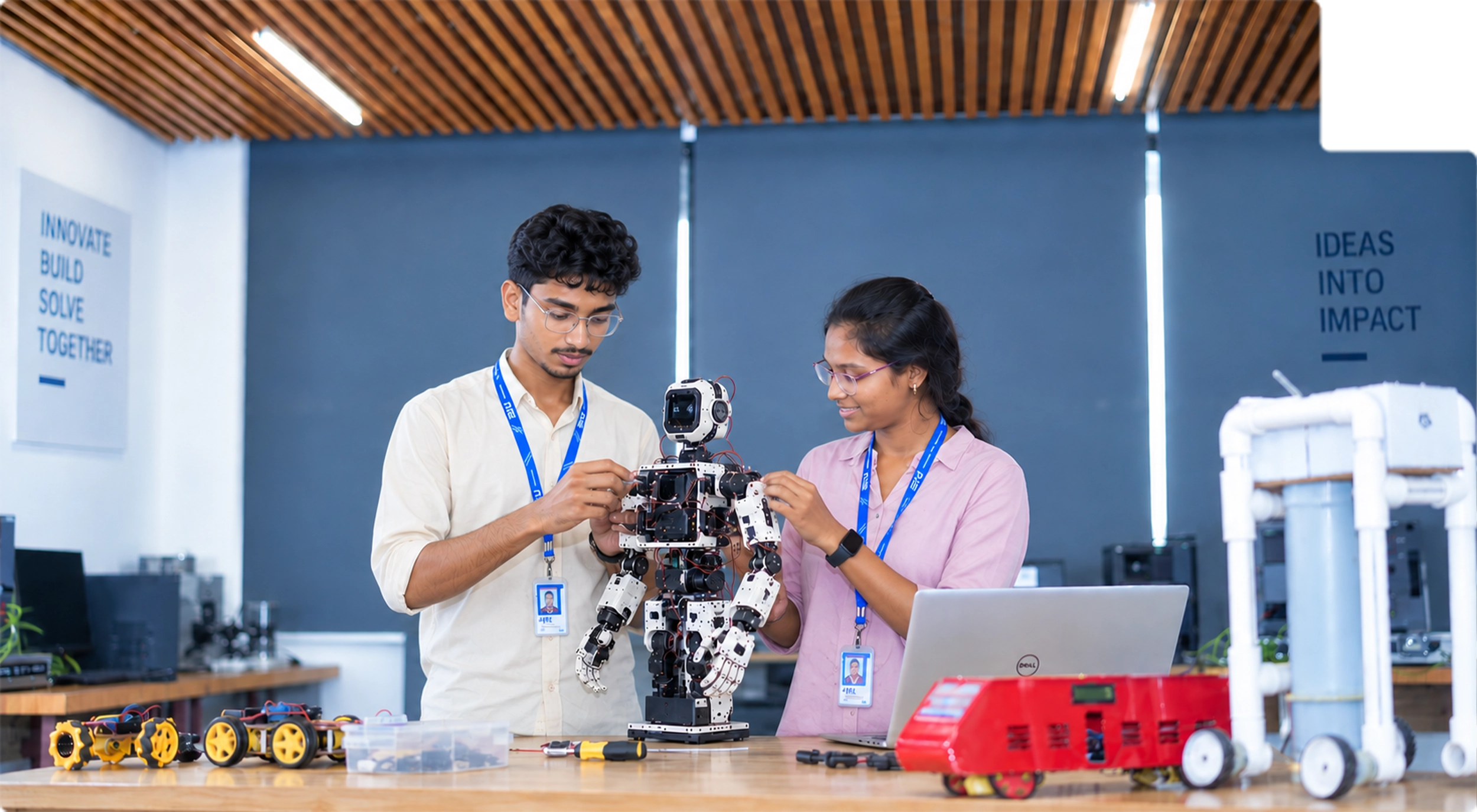
The B.Tech. Applied Chemistry in AI, Nano Robotics and Drug Discovery programme combines core chemical sciences with artificial intelligence (AI), nanotechnology, micro/nanorobotics, and drug discovery. It provides a strong foundation in organic, inorganic, physical, polymer, and materials chemistry, alongside programming, machine learning, cheminformatics, and laboratory automation. Through interdisciplinary coursework, practical training, self-driving laboratories, internships, and research projects, students develop expertise in molecular design, nanomaterials, nanocarriers, micro/nanorobotic systems, medicinal chemistry, and AI-driven drug discovery. The programme prepares graduates for careers in pharmaceutical, biotechnology, nanotechnology, advanced materials, and research sectors, as well as higher education and entrepreneurship.
  • PEO 1: Professional Competence: Establish successful careers in pharmaceuticals, biotechnology, nanotechnology, advanced materials, chemical and allied industries, and AI-driven discovery and automation by applying interdisciplinary knowledge and technical competencies.
  • PEO 2: Research and Innovation: Contribute to research, technological innovation, and advanced problem-solving by integrating chemistry with nanotechnology, robotics, artificial intelligence, and computational approaches.
  • PEO 3: Higher Education and Lifelong Learning: Pursue higher education, specialized training, and continuous professional development in chemistry, nanotechnology, artificial intelligence, and allied interdisciplinary fields.
  • PEO 4: Entrepreneurship and Societal Responsibility: Demonstrate entrepreneurial thinking, ethical responsibility, leadership, and commitment to developing safe, sustainable chemical, nanotechnological, and healthcare solutions addressing societal, industrial, and environmental challenges.

  • PO1: Chemical and Engineering Knowledge: Apply knowledge of mathematics, natural sciences, chemistry, computing, and engineering fundamentals to solve complex problems in nanorobotics, drug discovery, and allied areas.
  • PO2: Problem Analysis: Identify, formulate, review research literature, and analyze complex chemical, nanoscale, and biomedical problems to reach substantiated conclusions using principles of chemistry, mathematics, and data science.
  • PO3: Design and Development of Solutions: Design molecules, nanomaterials, devices, and processes that meet specified needs, with appropriate consideration for safety, regulatory, cultural, societal, and environmental aspects.
  • PO4: Conduct Investigations of Complex Problems: Use research-based knowledge and methods, including design of experiments, spectroscopic and analytical techniques, computational modelling, and data interpretation, to provide valid conclusions.
  • PO5: Modern Tool Usage: Create, select, and apply appropriate techniques, resources, and modern tools, including programming, machine learning, cheminformatics, molecular simulation, characterization instruments, and laboratory automation, with an understanding of their limitations.
  • PO6: The Engineer and Society: Apply reasoning informed by contextual knowledge to assess societal, health, safety, legal, and cultural issues and the consequent responsibilities relevant to chemical, nanotechnological, and pharmaceutical practice.
  • PO7: Environment and Sustainability: Understand the impact of chemical and nanotechnological solutions in societal and environmental contexts, and apply green chemistry and sustainable practices for sustainable development.
  • PO8: Ethics: Apply ethical principles and commit to professional ethics, research integrity, responsible use of data and AI, intellectual property rights, and regulatory norms in chemical and pharmaceutical research and practice.
  • PO9: Individual and Team Work: Function effectively as an individual, and as a member or leader in diverse and multidisciplinary teams spanning chemistry, computing, and biomedical fields.
  • PO10: Communication: Communicate effectively on complex scientific and engineering activities with the professional community and with society at large, through clear reports, documentation, presentations, and instructions.
  • PO11: Project Management and Finance: Demonstrate knowledge and understanding of scientific and management principles, and apply them to manage research projects and multidisciplinary, start-up, or industry-oriented ventures.
  • PO12: Life-long Learning: Recognize the need for, and have the preparation and ability to engage in, independent and life-long learning in the broadest context of rapid technological change in chemistry, AI, and nanotechnology.

  • PSO 1:  Chemical Sciences and Advanced Materials
    Apply principles of organic, inorganic, physical, polymer, and materials chemistry to design, synthesize, characterize, and optimize functional molecules and nanomaterials for healthcare, energy, industrial, and environmental applications.
  • PSO 2:  Computational Chemistry and Chemical Data Analytics
    Apply programming, cheminformatics, molecular modelling, statistical methods, and computational approaches to analyze, interpret, and integrate chemical, spectroscopic, and biological data for understanding structure–property–activity relationships.
  • PSO 3:  Artificial Intelligence in Drug Discovery and Molecular Design
    Develop and apply machine learning, deep learning, and AI-based computational models to address chemical and biomedical challenges, including molecular design, property and activity prediction, reaction prediction, drug discovery, and experiment optimization.

  • PSO 4:  NanoRobotics, Automation and Interdisciplinary Innovation
    Integrate nanomaterials, sensors, micro/nanorobotic systems, nanocarriers, laboratory automation, and AI-driven approaches to develop innovative, ethical, and sustainable solutions for targeted drug delivery, diagnostics, and related real-world challenges through interdisciplinary research, industry-oriented projects, and entrepreneurship.

Eligibility Criteria

icon

The candidate should obtain at least 55% of marks at 10+2 pattern.

icon

Students with Physics, Chemistry and Mathematics / Biology (PCM/B) two-year diploma in Agriculture / Seed Technology after 10th class or equivalent with a first class

Curriculum

1st Semester
2nd Semester
1st Semester Fees
Semester Fee
₹ 1,00,000
to full time B.Tech. Applied Chemistry in AI, NanoRobotics and Drug Discovery
1st Semester
2nd Semester
2nd Semester Fees
Semester Fee
₹ 1,00,000
to full time B.Tech. Applied Chemistry in AI, NanoRobotics and Drug Discovery
1st Semester
3rd Semester Fees
Semester Fee
₹ 1,00,000
to full time B.Tech. Applied Chemistry in AI, NanoRobotics and Drug Discovery
1st Semester
4th Semester Fees
Semester Fee
₹ 1,00,000
to full time B.Tech. Applied Chemistry in AI, NanoRobotics and Drug Discovery

Curriculum

Semester Fee
₹ 1,00,000
to full time B.Tech. Applied Chemistry in AI, NanoRobotics and Drug Discovery
Semester Fee
₹ 1,00,000
to full time B.Tech. Applied Chemistry in AI, NanoRobotics and Drug Discovery
Semester Fee
₹ 1,00,000
to full time B.Tech. Applied Chemistry in AI, NanoRobotics and Drug Discovery
Semester Fee
₹ 1,00,000
to full time B.Tech. Applied Chemistry in AI, NanoRobotics and Drug Discovery

Explore Our Different Scholarships

Explore Our Different Scholarships

Success Stories –
Meet Our Top Achievers

SRU students are making an impact in leading global organizations. Read their stories of hard work, perseverance, and success.

51 LPA
Package Secured
Software Engineer
Beerabonia Shiva Kumar
44 LPA
Package Secured
Software Engineer
Thangallapally Nihal
44 LPA
Package Secured
Software Engineer
Bijigiri Vignesh
Bijigiri Vignesh
44 LPA
Package Secured
Software Engineer
Ambati Krishna Sai
Ambati Krishna Sai

Our Top Recruiters

Our Events

Sparkill ’27 is Here! Get ready

Cultural

Sparkill ’27 is Here! Get ready

calendar icon January 26, 4:00 am
calendar icon SR University
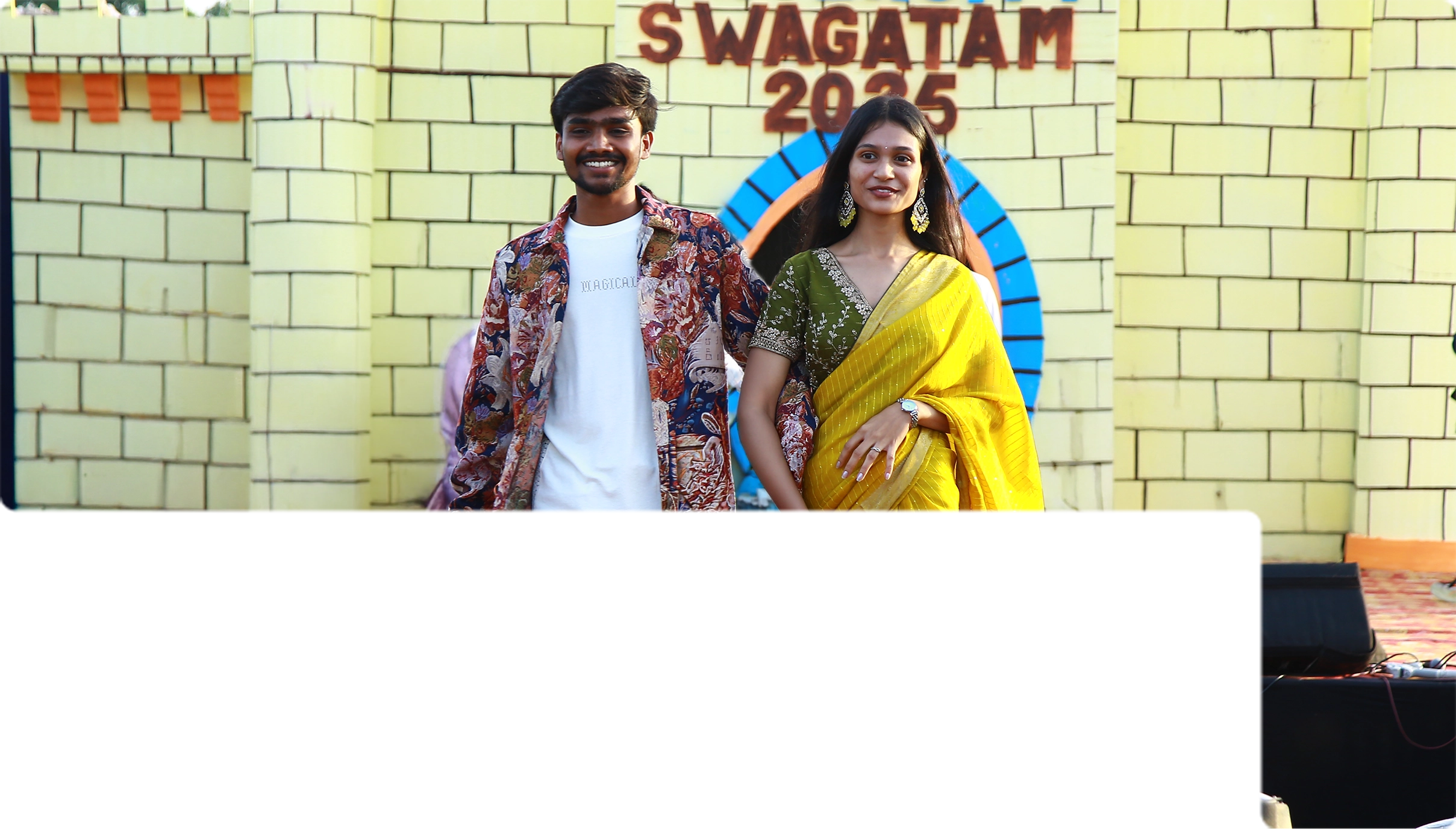
SR University presents Swagatham 2026

Cultural

SR University presents Swagatham 2026

calendar icon October 16, 12:00 am
calendar icon SR University

Be a Part of the Next Gen Living,
Learning Campus

Explore Our Schools

School of Design
Astra School of Business
School of Agriculture
School of Computer Science & Artificial Intelligence
School of Engineering